
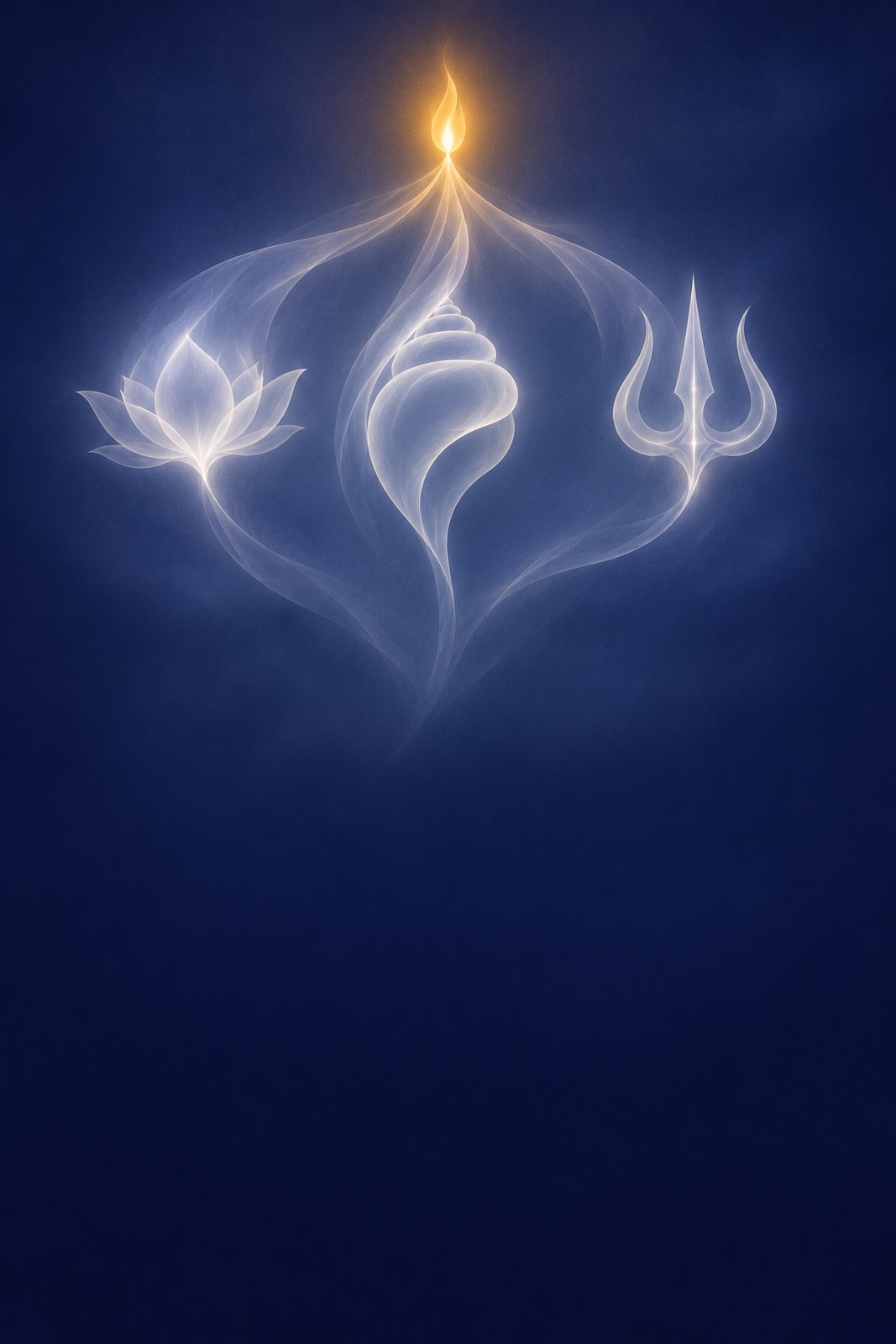
Hail Śiva, the Oṃ-formed one, Śiva who takes away sorrow. Brahmā, Viṣṇu and Sadāśiva: he who bears his consort as half of his body.
ओंकाररूप शिवाचा जय असो, दुःख हरणाऱ्या शिवाचा जय असो. ब्रह्मा, विष्णू आणि सदाशिव: जो अर्धांगीला आपल्या अर्ध्या अंगात धारण करतो तो.
जय हो ओंकार रूप शिव की, दुख हरने वाले शिव की। ब्रह्मा, विष्णु और सदाशिव: वे, जो अपनी अर्धांगिनी को आधे अंग में धारण करते हैं।
The print writes the first line once and afterwards only 'जय०' after each stanza.
One-faced, four-faced and five-faced, each shines: on a swan, on Garuḍa, on a bull, each looks splendid.
एक मुखाचा, चार मुखांचा आणि पाच मुखांचा, प्रत्येक शोभतो; हंस, गरुड आणि बैल यांवर बसलेले सगळे सुंदर दिसतात.
एक मुख वाले, चार मुख वाले और पाँच मुख वाले शोभित हैं; हंस पर, गरुड़ पर और बैल पर बैठे हुए सजते हैं।
The three gods are drawn by their mounts: Brahmā on the swan, Viṣṇu on Garuḍa, Śiva on the bull.
Two faces, four arms, ten faces (so the 1913 print; probably meant as two, four and ten arms): they look splendid. People of the three worlds see these three forms and are charmed.
दोन मुखे, चार भुजा, दहा मुखे: ही रूपे शोभतात. ही तिन्ही रूपे पाहून त्रिभुवनातील लोक मोहित होतात.
दो मुख, चार भुजाएँ, दस मुख, ये रूप सुन्दर लगते हैं। इन तीनों रूपों को देखकर तीनों लोकों के लोग मोहित हो जाते हैं।
दशमुखते is printed so; compare W2 (दशभुज तू). Kept as printed.
Wearers of the rosary, the forest garland and the garland of skulls; sandal paste, musk and the moon on the brow; bringers of good.
जपमाळ, वनमाला आणि रुंडमाळ धारण करणारे; कपाळावर चंदन, कस्तुरी आणि चंद्र; कल्याण करणारे.
वे जपमाला, वनमाला और मुण्डमाला धारण करने वाले हैं; माथे पर चन्दन, कस्तूरी और चन्द्रमा है। वे कल्याण करने वाले हैं।
Like stanza 1, this stanza gives one item for each of the three gods: the rosary (Brahmā), the forest garland (Viṣṇu) and the garland of skulls (Śiva); the text itself does not say which is whose.
White-robed, yellow-robed, tiger-skin clad, they shine; Sanaka and the other sages, and the spirits and their kind, look splendid too.
कोणी श्वेत वस्त्रात, कोणी पीतांबरात, कोणी वाघाच्या कातड्यात शोभतो; सनकादिक मुनी आणि भूतगणही शोभतात.
श्वेत वस्त्र वाले, पीले वस्त्र वाले और बाघ की खाल वाले शोभित हैं; सनक आदि मुनि और भूत आदि गण भी सजते हैं।
वावाम्बर is printed; the sense needs बाघाम्बर. Kept as printed.
In the hand the water-pot shines; bearers of the discus and the trident. Maker of the world, supporter of the world, destroyer of the world.
हातात कमंडलू शोभतो; चक्र आणि त्रिशूळ धारण करणारा. जगाचा निर्माता, जगाचे पालन करणारा आणि जगाचा संहार करणारा.
हाथ में कमण्डलु शोभित है; वे चक्र और त्रिशूल धारण करने वाले हैं। वे जगत को रचने वाले, पालने वाले और जगत का संहार करने वाले हैं।
The unwise know Brahmā, Viṣṇu and Sadāśiva (as separate). Within the letters of the praṇava, Oṃ, these three are one.
अविवेकी लोक ब्रह्मा, विष्णू आणि सदाशिव यांना (वेगळे) जाणतात. प्रणव ॐ च्या अक्षरांमध्ये हे तिन्ही एक आहेत.
अविवेकी लोग ब्रह्मा, विष्णु और सदाशिव को (अलग-अलग) जानते हैं। प्रणव ॐ के अक्षरों के भीतर ये तीनों एक हैं।
The heart of the āratī: Brahmā, Viṣṇu and Śiva are named together, and Oṃ is where they meet. प्रणव is another name for Oṃ, echoing the opening word ॐकारा.
Whoever sings the āratī of Śrī Śaṅkara, says Sadānanda Svāmī, gets the fruit he wished for.
जो कोणी श्री शंकराची ही आरती गातो, त्याला इच्छित फळ मिळते, असे सदानंद स्वामी म्हणतात.
जो कोई श्री शंकर की यह आरती गाता है, उसे मनचाहा फल मिलता है, ऐसा सदानन्द स्वामी कहते हैं।


