
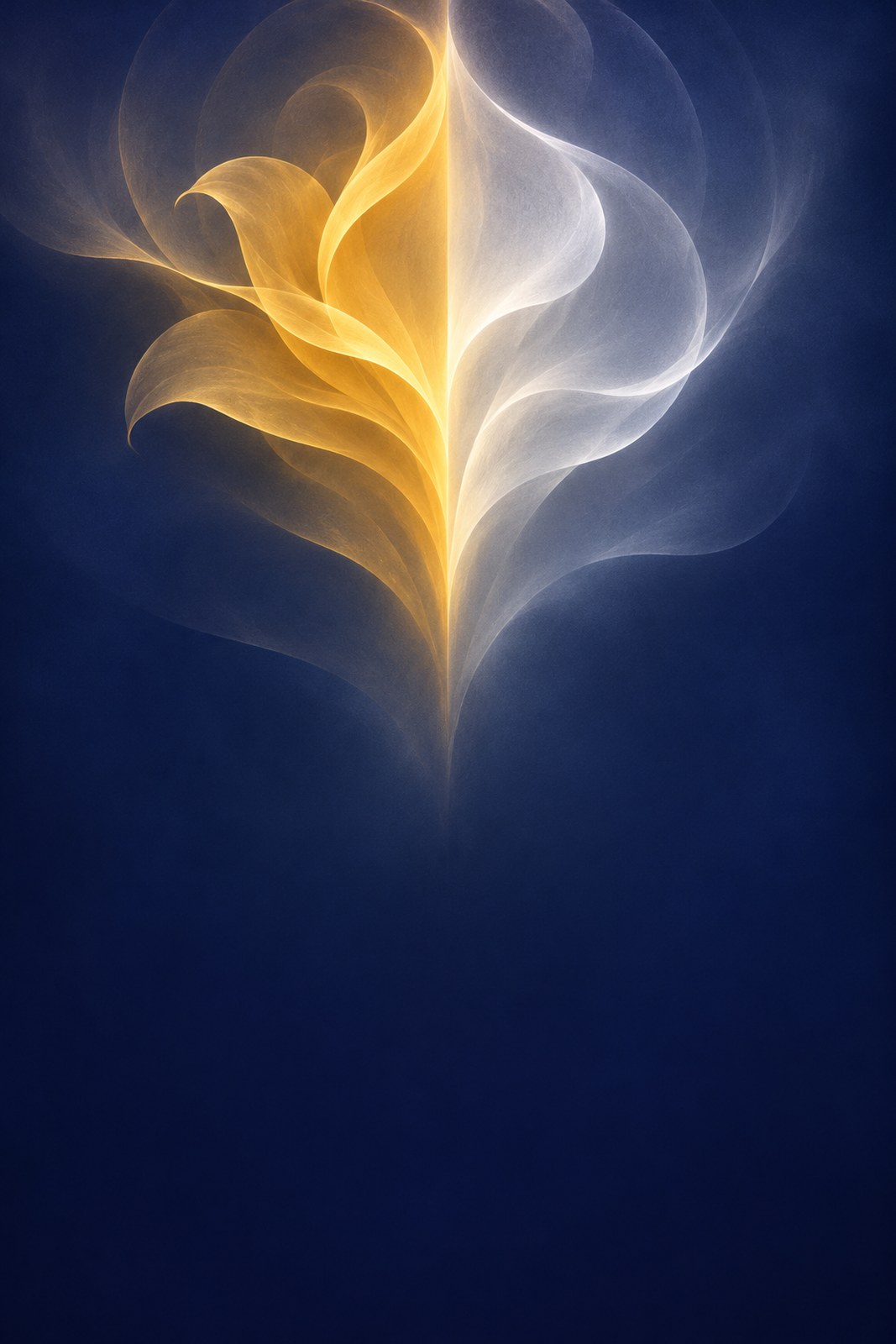
Bow to her whose half of the body is golden as the campaka flower, and to him whose half is white as camphor; to her with the bound-up hair, and to him who wears matted locks. Bow to Śivā, and bow to Śiva.
त्या देवीला नमस्कार जिचे अर्धे शरीर चाफ्याच्या फुलासारखे सोनेरी आहे, आणि त्याला ज्याचे अर्धे शरीर कापरासारखे शुभ्र आहे; जिचे केस अंबाड्यात बांधले आहेत तिला आणि जटा धारण करणाऱ्याला. शिवेला नमस्कार, शिवाला नमस्कार.
उन देवी को नमस्कार जिनका आधा शरीर चम्पा के फूल जैसा सुनहरा है, और उन्हें जिनका आधा शरीर कपूर जैसा श्वेत है; उन्हें जिनके केश जूड़े में बँधे हैं और उन्हें जो जटाएँ धारण करते हैं। शिवा को नमस्कार, शिव को नमस्कार।
Each quarter pairs a feature of the goddess (ending -āyai, to her) with one of the god (ending -āya, to him). The first line scans as indravajrā (long-long-short, long-long-short, short-long-short, long-long); lines 2–3 follow the same 11-syllable pattern with the usual freedom of upajāti. We checked v. 1 line 1 only.
Bow to her anointed with musk and saffron, and to him smeared with heaps of dust from the pyre; to her who awakens love, and to him who undid the god of love. Bow to Śivā, and bow to Śiva.
त्या देवीला नमस्कार जी कस्तुरी व केशराने लेपलेली आहे, आणि त्याला जो चितेच्या राखेच्या राशीने माखलेला आहे; प्रेम जागवणारीला आणि कामदेवाला नष्ट करणाऱ्याला. शिवेला नमस्कार, शिवाला नमस्कार.
उन देवी को नमस्कार जो कस्तूरी और केसर से लिप्त हैं, और उन्हें जो चिता की राख के ढेर से लिप्त हैं; उन्हें जो प्रेम जगाती हैं और उन्हें जिन्होंने कामदेव को नष्ट किया। शिवा को नमस्कार, शिव को नमस्कार।
The two lines of this verse are opposites: perfume against pyre-ash. In the last line we read कृतस्मरा as 'who makes Smara (love) present' and विकृतस्मर as 'who spoiled Smara', the usual reading by reference to Śiva burning Kāma; no commentary is available to us.
Bow to her whose bracelets and anklets ring, and to him whose lotus feet shine with snake anklets; to her with golden armlets, and to him with snakes for armlets. Bow to Śivā, and bow to Śiva.
त्या देवीला नमस्कार जिचे कंकण व पैंजण रुणझुणतात, आणि त्याला ज्याचे चरणकमल सर्पाच्या पैंजणांनी शोभतात; सोन्याचे बाजूबंद असलेलीला आणि सर्प बाजूबंद असलेल्याला. शिवेला नमस्कार, शिवाला नमस्कार.
उन देवी को नमस्कार जिनके कंगन और नूपुर झनकते हैं, और उन्हें जिनके चरण-कमल सर्प-नूपुरों से शोभित हैं; उन्हें जिनके भुजबन्ध सोने के हैं और उन्हें जिनके भुजबन्ध सर्प हैं। शिवा को नमस्कार, शिव को नमस्कार।
Bow to her whose eyes are wide blue lotuses, and to him whose eyes are opening lotuses; to her whose eyes are even in number (two), and to him whose eyes are odd in number (three). Bow to Śivā, and bow to Śiva.
त्या देवीला नमस्कार जिचे डोळे विशाल निळ्या कमळासारखे आहेत, आणि त्याला ज्याचे डोळे उमलत्या कमळासारखे आहेत; सम (दोन) डोळे असलेलीला आणि विषम (तीन) डोळे असलेल्याला. शिवेला नमस्कार, शिवाला नमस्कार.
उन देवी को नमस्कार जिनके नेत्र विशाल नीले कमल जैसे हैं, और उन्हें जिनके नेत्र खिले कमल जैसे हैं; उन्हें जिनके नेत्र सम (दो) हैं और उन्हें जिनके नेत्र विषम (तीन) हैं। शिवा को नमस्कार, शिव को नमस्कार।
समेक्षणा / विषमेक्षण: her eyes are even in number (two), his are odd (three, with the third eye). This is the traditional reading of the pair; the verse states only even and odd.
Bow to her whose curls wear a garland of mandāra flowers, and to him whose neck wears a garland of skulls; to her in heavenly cloth, and to him clothed only in the directions. Bow to Śivā, and bow to Śiva.
त्या देवीला नमस्कार जिच्या केसांच्या बटा मंदाराच्या माळेने सजल्या आहेत, आणि त्याला ज्याची मान कवट्यांच्या माळेने अंकित आहे; दिव्य वस्त्र नेसणारीला आणि दिशा हेच वस्त्र असलेल्याला. शिवेला नमस्कार, शिवाला नमस्कार.
उन देवी को नमस्कार जिनकी लटें मन्दार की माला से सजी हैं, और उन्हें जिनका कण्ठ खोपड़ियों की माला से चिह्नित है; उन्हें जो दिव्य वस्त्र पहनती हैं और उन्हें जिनके वस्त्र केवल दिशाएँ हैं। शिवा को नमस्कार, शिव को नमस्कार।
Bow to her whose hair is dark as a rain-cloud, and to him whose matted locks are coppery as the flash of lightning; to her who has no lord above her, and to him who is lord of everything. Bow to Śivā, and bow to Śiva.
त्या देवीला नमस्कार जिचे केस पावसाळी ढगासारखे सावळे आहेत, आणि त्याला ज्याच्या जटा विजेच्या तेजासारख्या तांब्याच्या रंगाच्या आहेत; जिच्यावर कोणी स्वामी नाही तिला आणि सर्वांच्या ईश्वराला. शिवेला नमस्कार, शिवाला नमस्कार.
उन देवी को नमस्कार जिनके केश वर्षा-मेघ जैसे श्याम हैं, और उन्हें जिनकी जटाएँ बिजली की चमक जैसी ताँबे के रंग की हैं; उन्हें जिनके ऊपर कोई स्वामी नहीं और उन्हें जो सबके ईश्वर हैं। शिवा को नमस्कार, शिव को नमस्कार।
निरीश्वरा is read here as 'one with no ruler over her' (the supreme goddess), set against निखिलेश्वर, 'lord of all'. Another reading, 'she who is not a mere lord', is possible; no commentary available to us.
Bow to her whose gentle dance turns toward the making of the world, and to him whose fierce dance ends all of it; to the mother of the world, and to the one father of the world. Bow to Śivā, and bow to Śiva.
त्या देवीला नमस्कार जिचे कोमल नृत्य जगाच्या निर्मितीकडे वळलेले आहे, आणि त्याला ज्याचे प्रचंड नृत्य सर्वांचा संहार करते; जगाच्या मातेला आणि जगाच्या एकमेव पित्याला. शिवेला नमस्कार, शिवाला नमस्कार.
उन देवी को नमस्कार जिनका कोमल नृत्य जगत की सृष्टि की ओर उन्मुख है, और उन्हें जिनका प्रचण्ड नृत्य सबका संहार करता है; जगत की माता को और जगत के एकमात्र पिता को। शिवा को नमस्कार, शिव को नमस्कार।
लास्य (the soft, graceful dance) and ताण्डव (the fierce dance) are the two dances traditionally paired with Pārvatī and Śiva.
Bow to her whose earrings blaze with bright jewels, and to him adorned with great glittering snakes; to her who is joined with Śiva, and to him who is joined with Śivā. Bow to Śivā, and bow to Śiva.
त्या देवीला नमस्कार जिची कुंडले तेजस्वी रत्नांनी झळकतात, आणि त्याला जो चमकणाऱ्या मोठ्या सर्पांनी सजलेला आहे; शिवाने युक्त असलेलीला आणि शिवेने युक्त असलेल्याला. शिवेला नमस्कार, शिवाला नमस्कार.
उन देवी को नमस्कार जिनके कुण्डल दमकते रत्नों से उज्ज्वल हैं, और उन्हें जो चमकते विशाल सर्पों से सजे हैं; उन्हें जो शिव से युक्त हैं और उन्हें जो शिवा से युक्त हैं। शिवा को नमस्कार, शिव को नमस्कार।
Each half is named 'joined with' the other: the feminine शिवान्विता for her and the masculine शिवान्वित for him.
Whoever recites this eight-verse hymn that grants what is wished, with devotion, is honoured on earth and lives long; he gains good fortune for endless time, and may every kind of success always be his.
जो भक्तीने इच्छित फल देणाऱ्या या अष्टकाचे पठण करतो, तो पृथ्वीवर सन्मानित व दीर्घायुषी होतो; तो अनंत काळ सौभाग्य मिळवतो, आणि सर्व प्रकारच्या सिद्धी त्याला सदा लाभोत.
जो भक्ति से इच्छित फल देने वाले इस अष्टक का पाठ करता है, वह पृथ्वी पर सम्मानित और दीर्घायु होता है; वह अनन्त काल तक सौभाग्य पाता है, और सब प्रकार की सिद्धि सदा उसकी हो।
The ninth verse is the phalaśruti (the promised fruit of reciting). It has no refrain. The 'eight' (aṣṭaka) are the eight verses before it.
Thus ends the Hymn to the Lord who is half woman, made by the revered Śaṅkara Bhagavat, pupil of the revered Govinda Bhagavatpāda and teacher of the order of wandering renunciants of the highest rank.
अशा प्रकारे श्रीमान परमहंस परिव्राजक आचार्य, श्री गोविंद भगवत्पाद यांचे शिष्य, श्रीमान शंकर भगवान यांनी रचलेले ‘अर्धनारीश्वर स्तोत्र’ पूर्ण झाले.
इस प्रकार श्रीमान् परमहंस परिव्राजक आचार्य, श्री गोविन्द भगवत्पाद के शिष्य, श्रीमान् शंकर भगवान की रचना ‘अर्धनारीश्वर स्तोत्र’ पूर्ण हुई।
The colophon names Śaṅkara; it is the print's statement and is not independent evidence. See work.attribution.


