

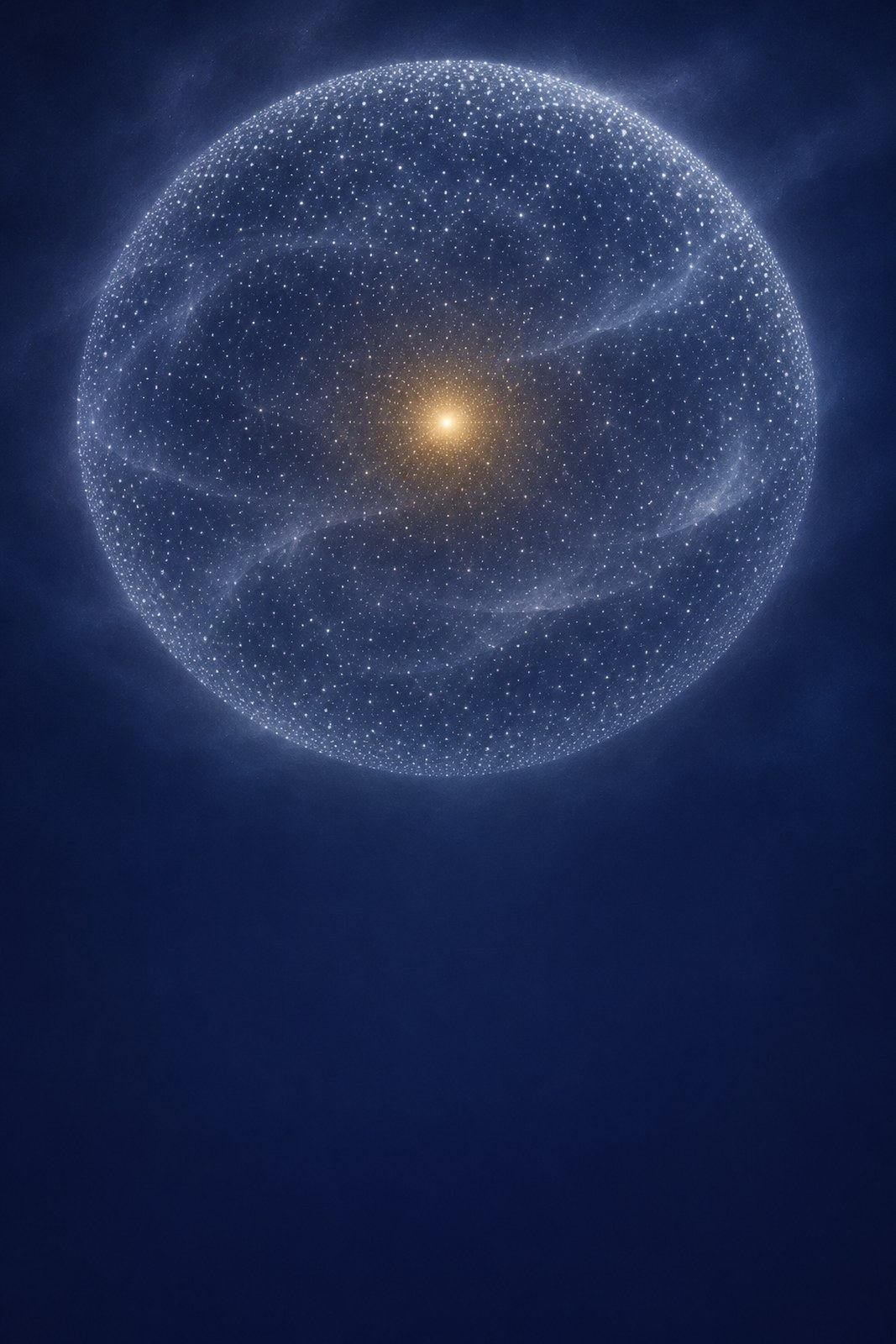
The Person has a thousand heads, a thousand eyes, a thousand feet. He covered the earth on every side and still stood beyond it by ten fingers' breadth.
त्या पुरुषाला सहस्र मस्तके, सहस्र डोळे, सहस्र पाय आहेत. तो पृथ्वीला सर्व बाजूंनी व्यापून तिच्याही पलीकडे दहा अंगुळे उरून राहिला.
उन पुरुष के सहस्र सिर हैं, सहस्र आँखें हैं, सहस्र चरण हैं। वे पृथ्वी को सब ओर से घेरकर भी उससे दस अंगुल आगे तक स्थित रहे।
Sāyaṇa in W1 (p. 194): ‘thousand’ stands for ‘countless’; every creature's head is his, because all bodies lie inside his body. ‘Ten fingers’ means he stands beyond the whole cosmos too.
All this is the Person alone: what has been and what is still to come. He is lord of immortality too, and he grows out into this visible world through food.
हे सर्व पुरुषच आहे: जे होऊन गेले आणि जे पुढे होणार आहे ते. तो अमरत्वाचाही स्वामी आहे, आणि अन्नासाठी (प्राण्यांना कर्मफळ मिळावे म्हणून) तो या दिसणाऱ्या जगाच्या रूपाने वाढून येतो.
यह सब कुछ पुरुष ही हैं: जो हो चुका और जो आगे होगा। वे अमरता के भी स्वामी हैं, और अन्न के कारण (प्राणियों को कर्मफल मिले, इसलिए) वे इस दिखाई देने वाले संसार के रूप में बढ़ आते हैं।
Sāyaṇa in W1 (p. 195): so that beings may taste the fruit of their deeds (‘food’), he passes beyond his causal state into the visible world; this is not his true nature. The print writes the Taittirīya nasal ꣳ in एवेदꣳ.
Such is his greatness, and the Person is greater still. All beings are one quarter of him; three quarters of him are the immortal, in the heavens.
इतका त्याचा महिमा आहे, आणि पुरुष याहूनही मोठा आहे. सर्व प्राणी त्याचा एक पाद (चतुर्थांश) आहेत; त्याचे तीन पाद अमर असून द्युलोकात (स्वतःच्या प्रकाशात) आहेत.
इतनी उनकी महिमा है, और पुरुष इससे भी बड़े हैं। सारे प्राणी उनका एक पाद (चौथाई) हैं; उनके तीन पाद अमर हैं, द्युलोक में (अपने ही प्रकाश में)।
Sāyaṇa in W1 (p. 195): Brahman has no measure, so ‘quarter’ only says how small the world is beside it. The bracketed (१) after पूरुषः in W1 marks the end of the first word-block (kaṇḍikā).
With three quarters the Person rose up, above; one quarter of him came to be here again and again. Then he spread out on every side, over what eats and what does not eat.
तीन पादांचा पुरुष वर उठला (संसारापासून अलिप्त राहिला); त्याचा एक पाद इथे पुन्हा पुन्हा प्रकट होत राहिला. मग तो सर्व दिशांनी पसरला, खाणाऱ्या (सजीव) आणि न खाणाऱ्या (निर्जीव) सर्वांत.
तीन पादों वाले पुरुष ऊपर उठ गए (संसार से अछूते रहे); उनका एक पाद यहाँ बार-बार प्रकट होता रहा। फिर वे सब ओर फैल गए, खाने वाले (सजीव) और न खाने वाले (निर्जीव) सब में।
Sāyaṇa in W1 (p. 195): the quarter comes again and again through creation and dissolution; ‘what eats’ = living beings, ‘what does not eat’ = mountains, rivers and the like. In W1 the last word looks like आभि, with the accent stroke on the अ; Sāyaṇa's gloss (अभिलक्ष्य) and W2 confirm अभि.
From him Virāṭ, the cosmic body, was born, and upon Virāṭ the Person (as the self within it). Once born, he grew beyond it (becoming gods, animals and men); then (he made) the earth, and after that the bodies.
त्याच्यापासून विराट् (ब्रह्मांडरूपी देह) जन्मला, आणि विराटावर (त्यात राहणारा) पुरुष. जन्मल्यावर तो त्याहून पुढे गेला (देव, पशू, मानव झाला); मग (त्याने) पृथ्वी (निर्माण केली), आणि त्यानंतर शरीरे.
उनसे विराट् (ब्रह्माण्ड रूपी देह) उत्पन्न हुआ, और विराट् के ऊपर (उसमें रहने वाले) पुरुष। जन्म लेकर वे उससे आगे बढ़ गए (देव, पशु, मनुष्य बने); फिर (उन्होंने) पृथ्वी (बनाई), और उसके बाद शरीर।
Sāyaṇa in W1 (p. 196) reads पुरः as ‘bodies’, filled with the seven tissues, and the Person ‘upon Virāṭ’ as the self that enters the cosmic body. The bracketed (२) marks the end of the second word-block.
When the gods spread out a sacrifice with the Person as the offering, spring was its ghee, summer its firewood, autumn its offering.
जेव्हा देवांनी पुरुषालाच हविर्द्रव्य मानून (मनाने) यज्ञ केला, तेव्हा वसंत त्याचे तूप होता, ग्रीष्म त्याचे सरपण, आणि शरद त्याचे हविर्द्रव्य.
जब देवों ने पुरुष को ही हवि मानकर (मन में) यज्ञ किया, तब वसन्त उसका घी था, ग्रीष्म उसका ईंधन, और शरद उसकी हवि।
Sāyaṇa in W1 (p. 196): no outer offering existed yet, so the gods made a sacrifice in the mind, with the Person himself imagined as the offering.
Seven were its enclosing sticks, thrice seven its fuel sticks, when the gods, performing the sacrifice, bound the Person as the victim.
त्या यज्ञाच्या सात परिधी होत्या, आणि तीन वेळा सात (एकवीस) समिधा केल्या, जेव्हा देवांनी यज्ञ करताना पुरुषालाच पशू म्हणून बांधले.
उस यज्ञ की सात परिधियाँ थीं, और तीन बार सात (इक्कीस) समिधाएँ बनीं, जब देवों ने यज्ञ करते हुए पुरुष को ही पशु के रूप में बाँधा।
Sāyaṇa in W1 (p. 197): the seven enclosing sticks are the seven metres; the twenty-one fuel sticks are the twelve months, five seasons, three worlds and the Sun. The Ṛgveda (W3, p. 350) has this verse last but one, as 10.90.15; see ‘versions’.
They sprinkled him on the sacred grass as the sacrifice, the Person born at the beginning. With him the gods sacrificed, and the Sādhyas, and the seers who were there.
आरंभी जन्मलेल्या त्या पुरुषाला यज्ञरूप मानून त्यांनी दर्भावर प्रोक्षण केले. त्यानेच देवांनी, साध्यांनी आणि तिथल्या ऋषींनी यज्ञ केला.
आदि में उत्पन्न उन पुरुष को, यज्ञ रूप मानकर, (देवों ने) कुश पर जल छिड़ककर पवित्र किया। उन्हीं से देवों ने, साध्यों ने और वहाँ के ऋषियों ने यज्ञ किया।
Sāyaṇa in W1 (p. 197): the Sādhyas are beings able to carry out creation, forms of Prajāpati's life-breath; the seers are the seers of the mantras.
From that sacrifice, in which all was offered, curd mixed with ghee was gathered. He made the animals that belong to Vāyu (the wind), those of the forest and those of the village.
त्या सर्वहुत यज्ञातून (ज्यात सर्व अर्पण झाले) दही मिसळलेले तूप गोळा झाले. त्याने वायुदेवतेचे पशू निर्माण केले, वनातले आणि गावातलेही.
उस सर्वहुत यज्ञ से (जिसमें सब कुछ अर्पित हुआ) दही मिला घी एकत्र हुआ। उन्होंने वायु देवता के पशु बनाए, वन के भी और गाँव के भी।
Sāyaṇa in W1 (p. 197): animals belong to the mid-air, and the mid-air's deity is Vāyu (the wind), so the animals are called Vāyu's.
From that sacrifice, in which all was offered, the Ṛk verses and the Sāman chants were born; the metres were born from it; the Yajus was born from it.
त्या सर्वहुत यज्ञातून ऋचा आणि साम जन्मले; त्यातूनच छंद जन्मले; त्यातूनच यजु जन्मला.
उस सर्वहुत यज्ञ से ऋचाएँ और साम उत्पन्न हुए; उसी से छन्द उत्पन्न हुए; उसी से यजुः उत्पन्न हुआ।
Sāyaṇa in W1 (p. 198): the metres are gāyatrī and the others.
From it horses were born, and all animals with teeth in both jaws. Cows were born from it; from it were born goats and sheep.
त्यातून घोडे जन्मले, आणि ज्यांना दोन्ही जबड्यांत दात असतात ते सर्व पशू. त्यातून गायी जन्मल्या; त्यातूनच शेळ्या आणि मेंढ्या जन्मल्या.
उससे घोड़े उत्पन्न हुए, और वे सब पशु जिनके दोनों जबड़ों में दाँत होते हैं। उससे गायें उत्पन्न हुईं; उसी से बकरियाँ और भेड़ें उत्पन्न हुईं।
Sāyaṇa in W1 (p. 198): those with teeth in both jaws, besides horses, are donkeys, mules and the like.
When they brought forth the Person, into how many parts did they shape him? What was his mouth, what his two arms, what are called his thighs and his feet?
जेव्हा त्यांनी पुरुषाला प्रकट केले, तेव्हा त्याला किती प्रकारे रचले? त्याचे मुख काय होते, दोन बाहू काय होते, मांड्या आणि पाय काय म्हटले जातात?
जब उन्होंने पुरुष को प्रकट किया, तब उन्हें कितने प्रकार से रचा? उनका मुख क्या था, दोनों भुजाएँ क्या थीं, जाँघें और चरण क्या कहलाते हैं?
Sāyaṇa in W1 (p. 198): these are the questions of the teachers of Brahman; the next verse answers them.
The Brāhmaṇa was his mouth; the Rājanya was made his two arms; his two thighs were what the Vaiśya is; from his two feet the Śūdra was born.
ब्राह्मण त्याचे मुख होता; राजन्याला (क्षत्रियाला) त्याचे दोन्ही बाहू केले गेले; जो वैश्य आहे, त्या त्याच्या दोन्ही मांड्या होत्या; त्याच्या पायांपासून शूद्र जन्मला.
ब्राह्मण उनका मुख था; राजन्य (क्षत्रिय) को उनकी दोनों भुजाएँ बनाया गया; जो वैश्य है, वह उनकी दोनों जाँघें थीं; उनके चरणों से शूद्र उत्पन्न हुआ।
Sāyaṇa in W1 (p. 198) reads ‘was his mouth’ as ‘was born from his mouth’, and says the same birth from the mouth and the other limbs is told plainly in the seventh kāṇḍa (स मुखतस्त्रिवृतं निरमिमीत …). The verse pictures the four orders of society as limbs of one body; how later ages used the verse is a separate question that these prints do not discuss. The bracketed (५) after कृतः marks the end of the fifth word-block.
The moon was born from his mind; from his eye the sun was born; from his mouth Indra and Agni; from his breath the wind was born.
त्याच्या मनापासून चंद्र जन्मला; डोळ्यापासून सूर्य जन्मला; मुखापासून इंद्र आणि अग्नी; प्राणापासून वायू जन्मला.
उनके मन से चन्द्रमा उत्पन्न हुआ; आँख से सूर्य उत्पन्न हुआ; मुख से इन्द्र और अग्नि; प्राण से वायु उत्पन्न हुआ।
Sāyaṇa in W1 (p. 199): as the ghee, animals, Vedas and men came from him, so did the gods. चक्षोः is an old form of चक्षुषः (Sāyaṇa).
From his navel came the mid-air; from his head the sky came forth; from his feet the earth, from his ear the directions. So they shaped the worlds.
त्याच्या नाभीपासून अंतरिक्ष झाले; मस्तकापासून द्युलोक प्रकटला; पायांपासून पृथ्वी, कानापासून दिशा. अशा रीतीने (देवांनी) लोक रचले.
उनकी नाभि से अन्तरिक्ष हुआ; सिर से द्युलोक प्रकट हुआ; चरणों से पृथ्वी, कान से दिशाएँ। इसी प्रकार (देवों ने) लोकों को रचा।
The bracketed (६) marks the end of the sixth word-block. In the Ṛgveda (W3, p. 350) the verse सप्तास्यासन् follows here; W2's footnote (p. 339) points this out.
I know this great Person, bright as the sun, beyond darkness: the wise one who shaped all forms, gave them names, and abides calling them by those names.
मी त्या महान पुरुषाला जाणतो, जो सूर्यासारखा तेजस्वी आणि अंधाराच्या पलीकडे आहे; तो धीर, ज्याने सर्व रूपे वेगवेगळी घडवली, त्यांना नावे दिली, आणि त्याच नावांनी त्यांच्याशी व्यवहार करत राहतो.
मैं उन महान् पुरुष को जानता हूँ, जो सूर्य के समान तेजस्वी हैं और अन्धकार के पार हैं; वे धीर, जिन्होंने सब रूपों को अलग-अलग रचा, उन्हें नाम दिए, और उन्हीं नामों से उन्हें पुकारते हुए रहते हैं।
Not in the Ṛgveda hymn (W2's footnote, p. 339; checked in W3, pp. 349–350). Sāyaṇa in W1 (p. 199): here the seer tells his own experience of meditation; the names are ‘this is a god, this a man, this an animal’; darkness is ignorance.
He whom the Creator made known first, whom Indra made known, knowing all who live in the four quarters: one who knows him so becomes immortal here itself. There is no other path for going (to that goal).
ज्याला धात्याने सर्वांत आधी प्रकट करून सांगितले, आणि चारही दिशांतील सर्व प्राण्यांना जाणणाऱ्या इंद्रानेही सांगितले, त्याला असे जाणणारा इथेच अमर होतो. (तिथे) जाण्याचा दुसरा मार्ग नाही.
जिन्हें धाता ने सबसे पहले प्रकट करके बताया, और चारों दिशाओं के सब प्राणियों को जानने वाले इन्द्र ने भी बताया, उन्हें इस प्रकार जानने वाला यहीं अमर हो जाता है। (वहाँ तक) जाने का कोई दूसरा मार्ग नहीं है।
Not in the Ṛgveda hymn (W2's footnote, p. 339; checked in W3). Sāyaṇa in W1 (pp. 199–200): Dhātā (Prajāpati) made him known for the good of meditators, and Indra did the same; no number of rites can give immortality, only this knowledge.
By sacrifice the gods worshipped the sacrifice; those were the first laws. Those great ones reach the heaven where the ancient Sādhyas, the gods, dwell.
देवांनी यज्ञाने यज्ञ(रूप पुरुषा)ची पूजा केली; तेच पहिले धर्म होते. ते थोर (उपासक) त्या स्वर्गाला पोचतात जिथे प्राचीन साध्य देव राहतात.
देवों ने यज्ञ से यज्ञ (रूप पुरुष) की पूजा की; वही पहले धर्म थे। वे महान् (उपासक) उस स्वर्ग को पाते हैं जहाँ प्राचीन साध्य देव रहते हैं।
Sāyaṇa in W1 (p. 200): the first half sums up the account of creation; the second half gives the fruit of worship. The bracketed (७) marks the end of the seventh word-block.
अनुवाकसूची · पुष्पिका
Reciters' index of the anuvāka's word-blocks: pūruṣaḥ, puraḥ, agrataḥ, ajāyata, kṛtaḥ, akalpayan, āsan, and two. Thus ends the twelfth anuvāka in the third prapāṭhaka of the Taittirīya Āraṇyaka of the Black Yajurveda.
अनुवाकातील शब्द-खंडांची पठणासाठीची सूची: पूरुषः, पुरः, अग्रतः, अजायत, कृतः, अकल्पयन्, आसन्, आणि दोन. अशा रीतीने कृष्णयजुर्वेदाच्या तैत्तिरीय आरण्यकाच्या तिसऱ्या प्रपाठकातील बारावा अनुवाक समाप्त झाला.
अनुवाक के शब्द-खण्डों की सूची, पाठ करने वालों के लिए: पूरुषः, पुरः, अग्रतः, अजायत, कृतः, अकल्पयन्, आसन्, और दो। इस प्रकार कृष्णयजुर्वेद के तैत्तिरीय आरण्यक के तीसरे प्रपाठक का बारहवाँ अनुवाक समाप्त हुआ।
Both prints give this index line after verse 18, in the text type: W1 (p. 200) runs it together, W2 (p. 339) separates the words with commas (पूरुषः, पुरः, अग्रतः, अजायत, कृतः, अकल्पयन्, आसन्, द्वे च). It lists words of the seven numbered word-blocks so reciters can check the text; it is not part of the hymn and many leave it out when chanting. We do not explain the count ‘two’ further, as neither print does. The colophon line is W1's.
He arose from the waters and from the essence of the earth; he came forth from Viśvakarman, the maker of all. Tvaṣṭṛ goes on shaping his form; the whole world, which is that Person's, was born at the beginning.
तो जलातून आणि पृथ्वीच्या रसातून (सारातून) उत्पन्न झाला; विश्वकर्म्यापासून (सर्वांच्या कर्त्यापासून) तो श्रेष्ठ रूपाने प्रकटला. त्वष्टा त्याचे रूप घडवत पुढे जातो; त्या पुरुषाचे हे सारे जग आरंभी जन्मले.
वे जल से और पृथ्वी के रस (सार) से उत्पन्न हुए; विश्वकर्मा (सबके रचयिता) से वे श्रेष्ठ रूप में प्रकट हुए। त्वष्टा उनका रूप गढ़ते हुए चलते हैं; उन पुरुष का यह सारा जगत् आदि में उत्पन्न हुआ।
Sāyaṇa in W1 (pp. 200–201): this is the Virāṭ Person called Nārāyaṇa; he arose from the waters that were everywhere; Tvaṣṭṛ here is Viśvakarman, the Lord, who shapes his form of the fourteen worlds. Sāyaṇa reads पृथिव्यै as ‘of the earth’.
I know this great Person, bright as the sun, beyond darkness. One who knows him so becomes immortal here itself; there is no other path for going (to that goal).
मी त्या महान पुरुषाला जाणतो, जो सूर्यासारखा तेजस्वी आणि अंधाराच्या पलीकडे आहे. त्याला असे जाणणारा इथेच अमर होतो; (तिथे) जाण्याचा दुसरा मार्ग नाही.
मैं उन महान् पुरुष को जानता हूँ, जो सूर्य के समान तेजस्वी हैं और अन्धकार से परे हैं। उन्हें इस प्रकार जानने वाला यहीं अमर हो जाता है; (वहाँ) जाने का कोई दूसरा मार्ग नहीं है।
Sāyaṇa in W1 (p. 201): to be explained as before (verse 16 and 17 of the Puruṣa Sūkta, whose halves this verse joins).
Prajāpati moves within the womb; never born, he is born in many ways. The steady-minded know his source fully; the makers of the world seek the station of Marīci and the great seers.
प्रजापती गर्भात संचार करतो; जन्म न घेताही तो अनेक प्रकारे जन्म घेतो. धीर (धैर्यवान) त्याचे मूळ पूर्णपणे जाणतात; सृष्टी करणारे (त्याच्याच उपासनेने) मरीची आदी महर्षींचे पद इच्छितात.
प्रजापति गर्भ के भीतर विचरते हैं; जन्म न लेते हुए भी वे अनेक प्रकार से जन्म लेते हैं। धीर (धैर्यवान्) उनके मूल को पूर्ण रूप से जानते हैं; सृष्टि करने वाले (उन्हीं की उपासना से) मरीचि आदि महर्षियों का पद चाहते हैं।
Sāyaṇa in W1 (p. 201): the womb is the cosmic egg; he is unborn in truth and born many times through māyā; the creators worship him and seek the station of Marīci, Atri and the other great seers. The bracketed (१) after विजायते marks the end of the first word-block of this anuvāka.
To him who shines for the gods, who is the priest of the gods, placed before them, who was born before the gods: salutation to the shining one, whose nature is Brahman.
जो देवांसाठी प्रकाशतो, जो देवांचा पुरोहित आहे, जो देवांच्या आधी जन्मला: त्या तेजस्वी, ब्रह्मस्वरूपाला नमस्कार.
जो देवों के लिए प्रकाशित होते हैं, जो देवों के पुरोहित हैं, जो देवों से पहले उत्पन्न हुए: उन प्रकाशमान, ब्रह्म-स्वरूप को नमस्कार।
Sāyaṇa in W1 (p. 202): he shines in the hearts of the gods as consciousness; the purohita is Bṛhaspati, the first-born is Hiraṇyagarbha; रुच = self-shining, ब्राह्मि = whose nature is the supreme Brahman.
Bringing forth the shining one of Brahman, the gods said in the beginning: the Brāhmaṇa who knows you thus, the gods will be in his power.
ब्रह्माच्या त्या तेजस्वी (तत्त्वा)ला प्रकट करताना देवांनी आरंभी हे म्हटले: जो ब्राह्मण तुला असे जाणेल, देव त्याला वश होतील.
ब्रह्म के उस प्रकाशमान (तत्त्व) को प्रकट करते हुए देवों ने आरम्भ में यह कहा: जो ब्राह्मण आपको इस प्रकार जानेगा, देव उसके वश में होंगे।
Sāyaṇa in W1 (p. 202): the gods address the supreme Self; whoever knows it so, all the gods depend on him, for he becomes their inner self. Sāyaṇa supports this with a sentence of the Vājasaneyins, ‘whoever knows “I am Brahman” becomes all this’.
Hrī (modesty) and Lakṣmī (fortune) are your two wives; day and night your two sides; the stars your form; the two Aśvins your open mouth. Grant what we desire; grant us that (the goods of this world); grant us all.
ह्री (लज्जा) आणि लक्ष्मी (ऐश्वर्य) तुझ्या दोन पत्नी आहेत; दिवस आणि रात्र तुझ्या दोन्ही बाजू आहेत; नक्षत्रे तुझे रूप आहेत; दोन्ही अश्विनीकुमार तुझे उघडे मुख आहेत. आम्हाला हवे ते दे; ते (या लोकातील संपत्ती) दे; सर्व काही दे.
ह्री (लज्जा) और लक्ष्मी (ऐश्वर्य) आपकी दो पत्नियाँ हैं; दिन और रात आपके दोनों पार्श्व हैं; नक्षत्र आपका रूप हैं; दोनों अश्विनीकुमार आपका खुला मुख हैं। जो हम चाहते हैं वह दीजिए; वह (इस लोक की सम्पत्ति) दीजिए; सब कुछ दीजिए।
Sāyaṇa calls this a mantra in the form of a yajus (prose formula), p. 202. On p. 203 he explains: Hrī is the goddess of modesty, Lakṣmī of prosperity; इष्टं = the self-knowledge we long for; अमुं = cattle, horses and other goods seen in this world; सर्वं = all good of this world and the next. मनिषाण is read by him as ‘grant’. The bracketed (२) marks the end of the second word-block.
अनुवाकसूची · पुष्पिका
Reciters' index: jāyate, vaśe, and seven. Thus ends the thirteenth anuvāka in the third prapāṭhaka of the Taittirīya Āraṇyaka of the Black Yajurveda.
पठणासाठीची सूची: जायते, वशे, आणि सात. अशा रीतीने कृष्णयजुर्वेदाच्या तैत्तिरीय आरण्यकाच्या तिसऱ्या प्रपाठकातील तेरावा अनुवाक समाप्त झाला.
पाठ करने वालों के लिए सूची: जायते, वशे, और सात। इस प्रकार कृष्णयजुर्वेद के तैत्तिरीय आरण्यक के तीसरे प्रपाठक का तेरहवाँ अनुवाक समाप्त हुआ।
Index line as printed in W1 (p. 202) and W2 (p. 344, जायते, वशे, सप्त च ॥ अनु० १३ ॥). Not part of the hymn; usually left out in chanting. Colophon line from W1.


