
He who at times fills the groves on the Yamunā's bank with music, a bee joyfully tasting the lotus faces of the cowherd women, whose feet are worshipped by Lakṣmī, Śiva, Brahmā, Indra and Gaṇeśa: May Jagannātha, the master, come into the path of my eyes.
जो कधी यमुनेच्या तीरावरील वनांत संगीताचा नाद घुमवतो, जो आनंदाने गोपस्त्रियांच्या मुखकमळाचा रस घेणारा भ्रमर आहे, ज्याचे चरण लक्ष्मी, शिव, ब्रह्मदेव, इंद्र आणि गणेश पूजतात — तो जगन्नाथ स्वामी माझ्या नेत्रांच्या मार्गात येवो (मला दर्शन देवो).
जो कभी यमुना-तट के वनों में संगीत छेड़ते हैं, जो आनन्द से गोप-स्त्रियों के मुखकमल का रस लेने वाले भ्रमर हैं, जिनके चरण लक्ष्मी, शिव, ब्रह्मा, इन्द्र और गणेश पूजते हैं — वे जगन्नाथ स्वामी मेरे नेत्रों के मार्ग में आएँ (मुझे दर्शन दें)।
Kālindī is the Yamunā. The burden ‘may he come into the path of my eyes’ asks for darśan, the sight of the Lord; it is printed in full in vv. 1 and 8 and abbreviated in between. Metre: śikhariṇī, by our count.
With a flute in his left hand, a peacock feather on his head, fine silk at his waist, casting sidelong glances at his companions, always at home in the play of life in lovely Vṛndāvana: May Jagannātha, the master, come into the path of my eyes.
ज्याच्या डाव्या हातात बासरी, मस्तकावर मोरपीस आणि कमरेवर रेशमी वस्त्र आहे, जो नेत्रांच्या कोपऱ्यातून सोबत्यांकडे तिरका कटाक्ष टाकतो, जो सुंदर वृंदावनात राहण्याच्या लीलेशी सदैव परिचित आहे — तो जगन्नाथ स्वामी माझ्या नेत्रांच्या मार्गात येवो (मला दर्शन देवो).
जिनके बाएँ हाथ में बाँसुरी, सिर पर मोरपंख और कमर पर रेशमी वस्त्र है, जो नेत्रों के कोने से साथियों पर तिरछी चितवन डालते हैं, जो सुन्दर वृन्दावन में निवास की लीला से सदा परिचित हैं — वे जगन्नाथ स्वामी मेरे नेत्रों के मार्ग में आएँ (मुझे दर्शन दें)।
Dwelling within his temple on the Blue Peak, bright as gold, on the shore of the great ocean, with his mighty brother Balabhadra and with Subhadrā between them, giving all the gods the chance to serve him: May Jagannātha, the master, come into the path of my eyes.
जो महासागराच्या तीरावर सोन्यासारख्या तेजस्वी नीलाचलावरील मंदिरात आपला बलवान भाऊ बलभद्र याच्यासह, सुभद्रेला मध्ये घेऊन राहतो आणि सर्व देवांना सेवेची संधी देतो — तो जगन्नाथ स्वामी माझ्या नेत्रांच्या मार्गात येवो (मला दर्शन देवो).
जो महासागर के तट पर सोने जैसे चमकते नीलाचल पर मन्दिर में अपने बलशाली भाई बलभद्र के साथ, सुभद्रा को बीच में लिए निवास करते हैं और सब देवताओं को सेवा का अवसर देते हैं — वे जगन्नाथ स्वामी मेरे नेत्रों के मार्ग में आएँ (मुझे दर्शन दें)।
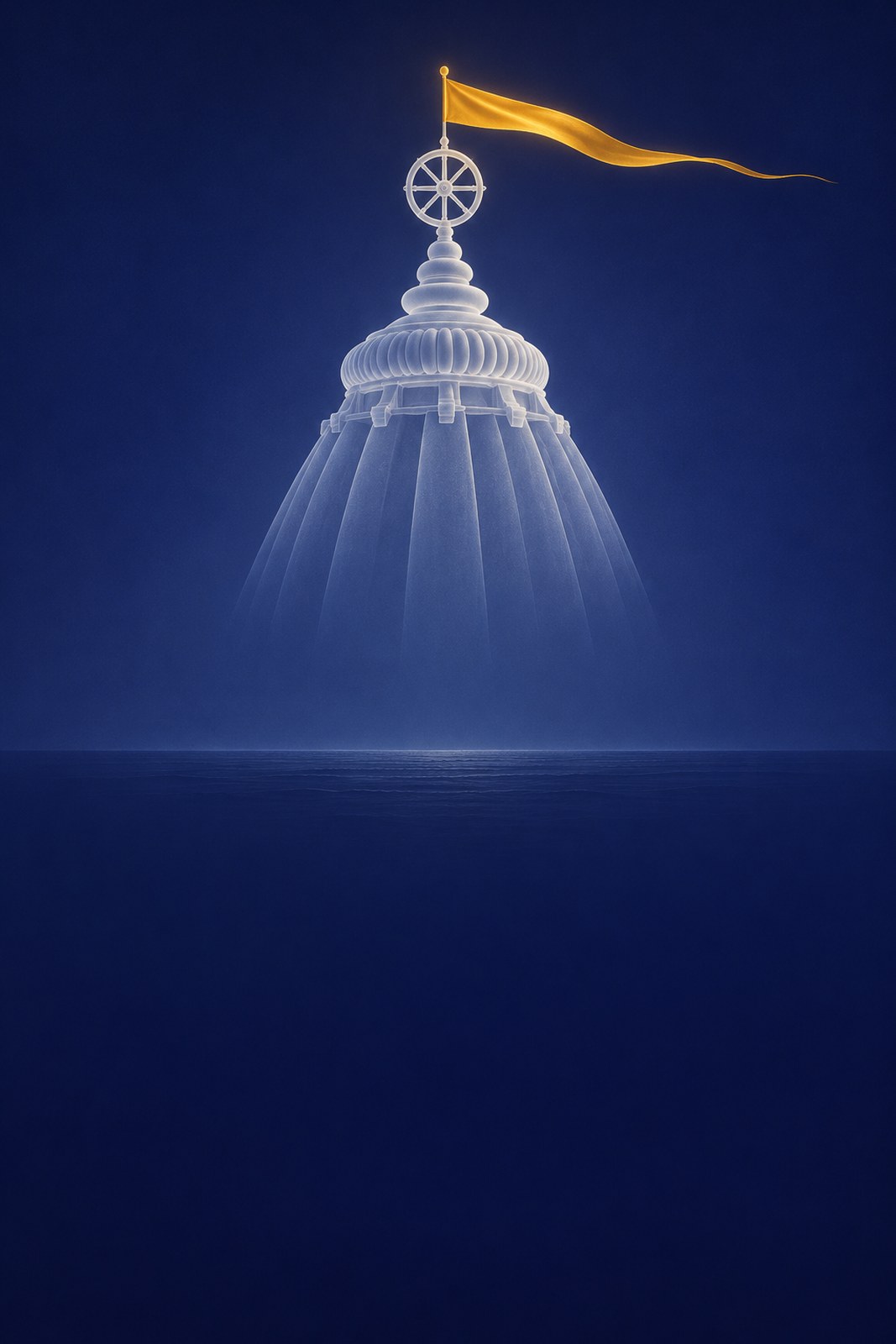
The temple of Jagannātha at Puri, on the Blue Hill (Nīlācala) by the sea, where he is worshipped with his brother Balabhadra and his sister Subhadrā.
An ocean of stories, lovely as a row of rain-laden clouds, to be worshipped by the lords of the gods, with Lakṣmī, Sarasvatī, Rāma and the one whose eyes are bright, spotless lotuses at their head, whose deeds the crown of the Vedas sings: May Jagannātha, the master, come into the path of my eyes.
जो कथांचा सागर आहे, जलाने भरलेल्या मेघांच्या रांगेसारखा सुंदर आहे, लक्ष्मी, सरस्वती, राम, निर्मळ उमललेल्या कमळांसारखे नेत्र असलेला, इत्यादी देवश्रेष्ठांना आराध्य आहे, ज्याचे चरित्र उपनिषदे गातात — तो जगन्नाथ स्वामी माझ्या नेत्रांच्या मार्गात येवो (मला दर्शन देवो).
जो कथाओं के सागर हैं, जल-भरे मेघों की पंक्ति जैसे सुन्दर हैं, लक्ष्मी, सरस्वती, राम और निर्मल खिले कमल जैसे नेत्रों वाले आदि श्रेष्ठ देवताओं के आराध्य हैं, जिनका चरित उपनिषद् गाते हैं — वे जगन्नाथ स्वामी मेरे नेत्रों के मार्ग में आएँ (मुझे दर्शन दें)।
v. 4 कथापारावारः and the long compound of line 2: sense uncertain; the prints give no gloss.
The second line is a list of worshippers; W1 and W2 differ in two of its names (राम / सोम, पद्मेक्षण / पद्मोद्भव). Our reading of W1's compound is provisional.
Mounted on his chariot, going along the road, he hears at every step the praise poured out by the gathered crowds of Brahmins and is moved to mercy; an ocean of mercy, kinsman of all the worlds, with Lakṣmī, the Ocean's daughter: May Jagannātha, the master, come into the path of my eyes.
रथावर आरूढ होऊन मार्गाने जात असताना, जमलेल्या ब्राह्मणांच्या समूहांची स्तुती पावलोपावली ऐकून जो दयेने द्रवतो, जो दयेचा सागर, सर्व जगांचा बंधू आहे आणि सागरकन्या लक्ष्मीसह आहे — तो जगन्नाथ स्वामी माझ्या नेत्रांच्या मार्गात येवो (मला दर्शन देवो).
रथ पर आरूढ़ होकर मार्ग पर चलते हुए, एकत्र हुए ब्राह्मणों के समूहों की स्तुति पग-पग पर सुनकर जो दया से भर जाते हैं, जो दया के सागर, सब लोकों के बन्धु हैं और समुद्र-पुत्री लक्ष्मी के साथ हैं — वे जगन्नाथ स्वामी मेरे नेत्रों के मार्ग में आएँ (मुझे दर्शन दें)।
The chariot is the Ratha Yātrā, Jagannātha's chariot festival at Puri.
The crown of the supreme Brahman, his eyes wide as blue-lotus petals, dwelling on the Blue Mountain, his feet resting on the head of Ananta, the bliss of rasa, delighting in the embrace of Rādhā's body, full of rasa: May Jagannātha, the master, come into the path of my eyes.
जो परब्रह्माचा मुकुटमणी आहे, ज्याचे नेत्र नीलकमळाच्या पाकळीसारखे उमललेले आहेत, जो नीलाचलावर राहतो, ज्याचे चरण अनंताच्या मस्तकावर ठेवलेले आहेत, जो रसाचा आनंद आहे आणि राधेच्या रसमय देहाच्या आलिंगनाने सुखी होतो — तो जगन्नाथ स्वामी माझ्या नेत्रांच्या मार्गात येवो (मला दर्शन देवो).
जो परब्रह्म के शिरोमणि हैं, जिनके नेत्र नील कमल की पंखुड़ी जैसे खिले हैं, जो नीलाचल पर निवास करते हैं, जिनके चरण अनन्त के सिर पर रखे हैं, जो रस का आनन्द हैं और राधा के रसमय शरीर के आलिंगन से सुखी होते हैं — वे जगन्नाथ स्वामी मेरे नेत्रों के मार्ग में आएँ (मुझे दर्शन दें)।
I do not pray for kingship, nor for gold, nor the riches of pleasure; I do not beg for a lovely bride whom all desire. He whose deeds Śiva, lord of the Pramathas, always sings, time after time: May Jagannātha, the master, come into the path of my eyes.
मी राज्य मागत नाही, सोनेही नाही, भोगाचे वैभवही नाही; जिची सर्व लोक इच्छा करतात अशी सुंदर श्रेष्ठ वधूही मागत नाही. ज्याचे चरित्र प्रमथपती शिव सदैव, प्रत्येक वेळी गातो — तो जगन्नाथ स्वामी माझ्या नेत्रांच्या मार्गात येवो (मला दर्शन देवो).
मैं राज्य नहीं माँगता, न सोना, न भोग का वैभव; न ही ऐसी सुन्दर श्रेष्ठ वधू, जिसे सब चाहते हैं। जिनका चरित प्रमथपति शिव सदा, हर समय गाते हैं — वे जगन्नाथ स्वामी मेरे नेत्रों के मार्ग में आएँ (मुझे दर्शन दें)।
Take away, O lord of the gods, this worthless worldly existence, quickly; take away, O lord of the Yādavas, the boundless spread of sins. Ah, for one wretched and helpless who has set himself unmoving in you, the sure refuge: May Jagannātha, the master, come into the path of my eyes.
हे देवांच्या स्वामी, हा निःसार संसार त्वरित हरण कर; हे यादवपती, पापांचा अपार विस्तार हरण कर. अहो, मी दीन-अनाथ, ज्याने तुझ्यात अचल आश्रय घेतला आहे, त्या माझ्यासाठी तू निश्चित आश्रय आहेस — तो जगन्नाथ स्वामी माझ्या नेत्रांच्या मार्गात येवो (मला दर्शन देवो).
हे देवताओं के स्वामी, इस सारहीन संसार को शीघ्र हर लीजिए; हे यादवपति, पापों के अपार विस्तार को हर लीजिए। अहो, मुझ दीन-अनाथ के लिए, जिसने आप में अचल आश्रय लिया है, आप निश्चित आश्रय हैं — वे जगन्नाथ स्वामी मेरे नेत्रों के मार्ग में आएँ (मुझे दर्शन दें)।
v. 8 line 3: निश्चितपदं may agree with दीनानाथं (‘me, the helpless, whose place is fixed in you’); our reading is provisional.
Thus ends the Śrī Jagannāthāṣṭaka.
याप्रमाणे श्रीजगन्नाथाष्टक संपूर्ण झाले.
इस प्रकार श्रीजगन्नाथाष्टक सम्पूर्ण हुआ।
W1's colophon names no author. W2's colophon ascribes the hymn to Śaṅkara (the ādi Śaṅkarācārya); others ascribe it to Caitanya. We record the ascription only as W2's.

